Find the camp first
On Acatenango, the time to the top depends on where the group sleeps and how the trail is doing. The tent example starts around 3,750 m. The other listing describes its own approach. Compare the camps and beds before using a summit time to set your alarm. Use the walk time to plan your layers. Note where you eat breakfast and whether to roll up your bedding before leaving or after getting back.
| Item | What to expect |
|---|---|
| Acatenango summit1 | 3,976 m |
| One tent camp to summit2 | 45 minutes on that route |
| Another camp to summit3 | 1.5 to 2 hours on that route |
| Health check4 | Avoid ascent while symptomatic |
Two camps, two starts
| Published itinerary | Camp altitude | Dawn walking time | Breakfast |
|---|---|---|---|
| Old Town Outfitters tent trip | About 3,750 m | Roughly 45 minutes uphill in its plan. | Hot breakfast before leaving camp. |
| Explore Acatenango overnight | About 3,600 m | Roughly 1½–2 hours uphill. The package gives around 03:00 as a scheduled start. | Breakfast after hikers return to camp. |
The difference is about 150 m between those advertised camps, and roughly 225 m or 375 m of net gain from camp to the 3,976 m summit. Net gain is the difference between two altitudes. It says little about the slope under your boots or the time spent on winding paths. During the summit walk, the higher camp’s route describes steep sand and gravel with small pines, then a rocky exposed top. Use the time from your own camp to judge how much of the morning you will spend moving before sunrise. Old Town Outfitters summit itinerary · Explore Acatenango summit itinerary
An early breakfast schedule means you might be eating at the camp before the lamp goes on. On a schedule with food after you return, take a snack you can get at without unpacking your other gear. The first meal and the pack-up time can be different for the people staying at camp. Ask whether they eat with the returning climbers and when they need to be ready to walk downhill.
Agree where to wait
At dinner, agree on who stays with hikers at camp and where a walker who turns back can rejoin them. If someone wants to skip the ridge, arrange an exact waiting point that stays clear of any closed area. Be at the agreed meeting point for the guide’s head count before the main descent. Symptoms of altitude illness should change the plan. Tell the guide and avoid gaining more height while symptomatic.
Lay out a dawn kit
Keep the headlamp, warm layers, gloves and water together by the bed. Dry and reset the kit after walking to camp. Practise opening any straps and bottle lids with gloves. The packing list helps separate this small pack from gear you leave in camp. Use the light when moving near other people on loose ground and follow the guide’s spacing instructions.
Before the sky gets light
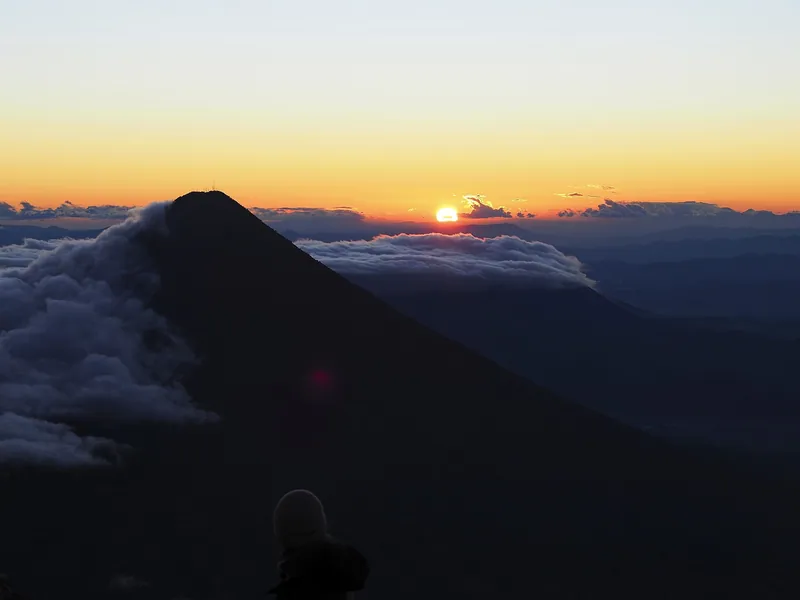
Set out your clothes in the order you will put them on. If your hat affects how your lamp fits, adjust both in the evening. Have a spare light or batteries where you can reach them. The opening minutes may be cold even when the climb quickly warms you up. Keep a layer that blocks wind accessible for stops. INGUAT describes overnight or predawn conditions near 0°C and potentially lower on Acatenango. A warm room in Antigua or a hot uphill walk the previous afternoon is a poor guide to what it feels like waiting still at the top. INGUAT Acatenango guidance
The final approach can use the loose sand and stone described in the tent itinerary. At a steep point, allow space around the walker ahead and use the way your guide indicates. Coming back in daylight makes the footing easier to read, but the climb has already tired your legs. Put away phones at the steep parts and take them out when you have room to stop. At the top your guide can choose where to stand and how long the group can stay. One published plan budgets up to about 45 minutes there in reasonable conditions. Old Town Outfitters summit itinerary
Decide at camp
Agree when the guide will make the decision and what signal will wake people for the climb. Get the meeting place in daylight. If you share a room, keep a dry bag of warm layers and a working lamp close at hand. Adjust the lamp before bed so you can step outside and listen to the guide with your hands free.
Talk through what you will do if you start and then choose to go down. Show your companion the place to wait and agree who would accompany a returning hiker. Review with your guide how changes in wind, footing or visibility affect the route on the way up. The time in the advertised itinerary describes one trip and conditions can make your ascent and descent slower.
Keep the next meal and pickup locations for each route plan with your schedule. If part of your party waits below, say where they can use shelter and when they will hear from the guide again. That plan also helps if the entire group stays at camp.
Set a return limit
Use the guide’s planned turnaround or descent time to plan your morning. Record where your party meets again for breakfast or to collect a stored bag. A clear sky can open a view toward Fuego. Cloud and wind can change overnight regardless of the season. If you stay at camp, watch the daylight from there and rejoin the guide for the descent.
A morning from camp
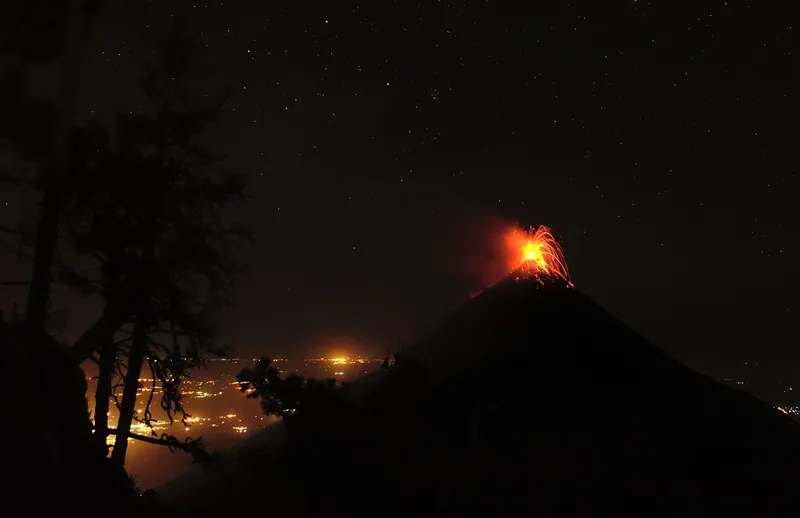
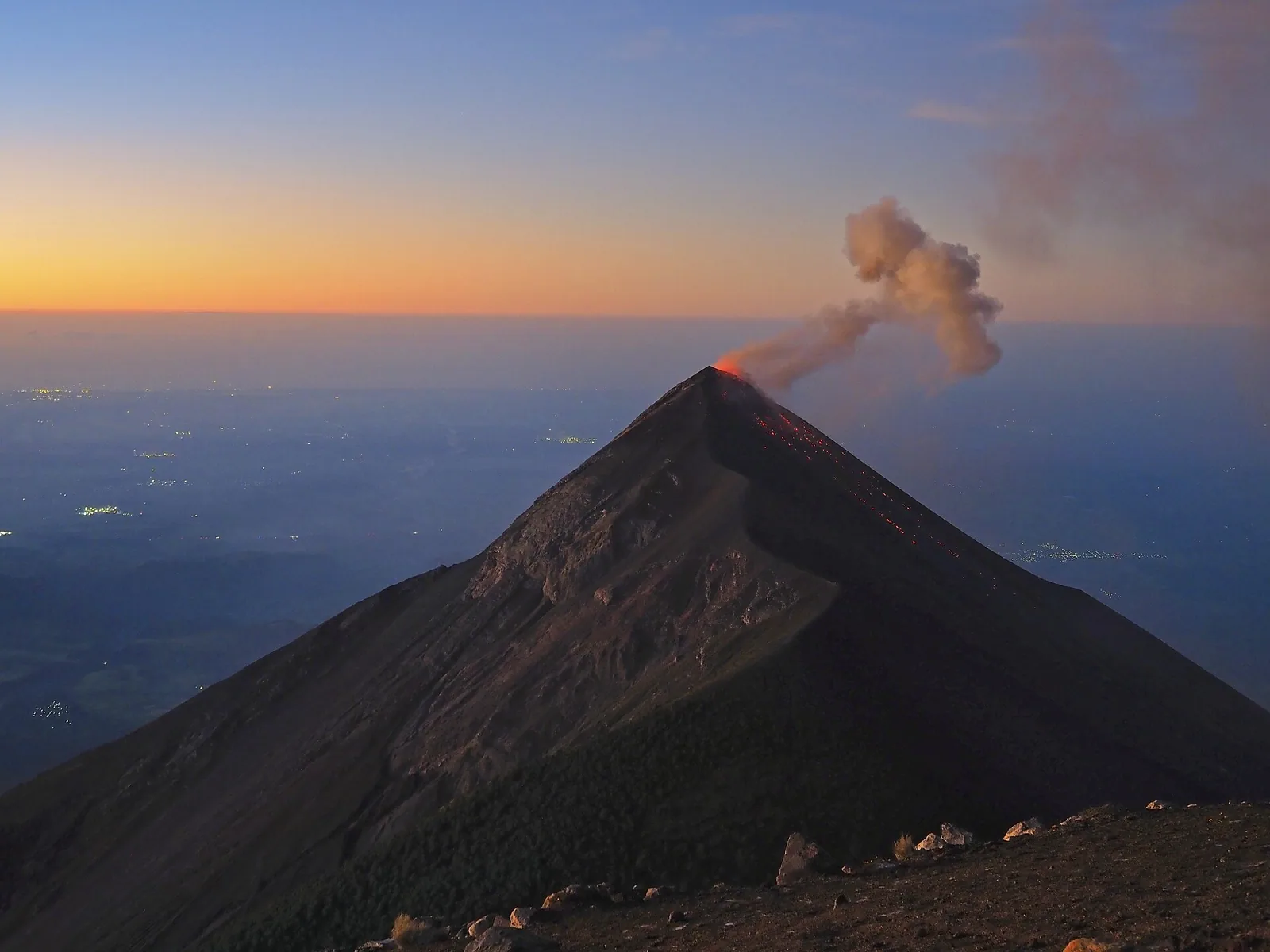
If you skip the summit, you may still see the color come up behind ridges and see Fuego from a facing camp. The view from a particular cabin or tent depends on where it sits, so use the common area your guide identifies. It can be a shorter walk to shelter than from the summit. Have a warm layer and headlamp beside the bed if you plan to go out before daylight, and find where people will leave bags for the descent.
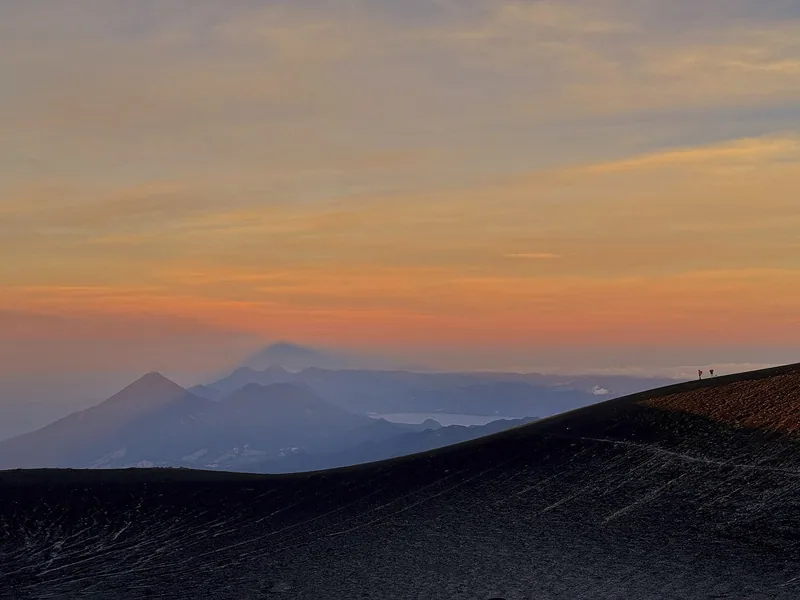
The summit on a clear morning can open views toward Agua, Pacaya and other mountains, and INGUAT describes more distant landscape becoming visible in exceptionally clear conditions. Cloud can cover one side while light comes up on the other. For a Fuego-focused visit, an evening view and a second look from a suitably placed camp give you two chances without adding the coldest, highest part of the route. If a panorama is the main reason to climb, think about whether you still want the walk when the guide expects wind and an obscured summit. INGUAT Acatenango panorama
Work from your camp
The tent camp itinerary describes about 45 minutes from its camp to the summit. Another overnight operator publishes about 1½ to 2 hours. These figures can differ because the starting shelters, route and assumed pace differ. Use the duration in your own package. Add time to get dressed and assemble in the dark. Even hikers who leave from neighbouring camps can have different meeting points and routes. If you are unsure about the route, take the decision with the guide the previous evening.
Set up your lamp with the hat and gloves you will wear. Put a warm layer and something that blocks wind in reach beside your water. Eat a suitable snack if the main breakfast is scheduled after the summit, and follow the guide’s departure directions. At dawn, the wind or trail conditions may mean the group comes back before reaching the summit. Decide in advance whether it is the walking experience or a particular view you most want. The Fuego viewing guide explains why you can use a clear view from camp even if you skip the higher leg.
If you wake feeling unwell, talk to the guide before going higher. The altitude guide describes when to stop and report symptoms, with CDC guidance. If you wait at camp, stay in the agreed area, keep something dry to wear and time your breakfast around the return arrangements. The long descent comes after that decision either way, so keep water and a layer for the walk down.
Wait until the guide gives the departure time at camp before setting an alarm. Organise your headlamp, warm gloves and drinking water before settling into the bunk. Know which trail returns to your shelter if the guide sends part of the group down early. Once the group is back from the viewpoint, allow time for breakfast, time to put packs back together and the full descent. A sunrise time alone does not tell you when a booked car or onward shuttle should leave Antigua.