Choose your window
If your dates are flexible, hike Acatenango in the dry season and leave room for a change. Conditions in Antigua, at the trailhead and at the summit ridge can differ. Use the guide’s update to identify which part of the route is likely to get wind or rain.
In the wetter months, prepare to walk in rain and get into dry layers as soon as you reach camp. Test the rain cover before the hike and put a base layer inside a liner. The packing guide separates items that must stay dry from things you need while walking.
| Item | What to expect |
|---|---|
| Drier season1✓ | November to April |
| Wetter season2 | May to October |
| Departure check3 | Check rain, wind and storms with the guide |
| Changing access4 | Check the official daily volcano bulletin and local gate |
Visit Guatemala places the dry period in November through April and the rainy season in May through October. One Antigua operator uses the same seasonal division in its Acatenango planning material. The period is a way to select dates. It gives no daily probability of rain for a specific camp. Dry-season evenings can still turn cold. Wet-season days can still have breaks in the cloud. Decide which condition would matter most to your group before making a nonrefundable booking. A person who wants to sleep at camp and see Fuego might value a second night in Antigua to move the climb. A person who wants to hike through the forest can be happier going ahead with passing showers.
Use the shoulder of each season to judge what to keep flexible. An early rainy-season departure still needs dry clothing at camp from the first day. A November trip should also pack a shell. December through February gets an explicit below-freezing warning in the equipment guide of one camp operator. Its common nighttime example is 2 to 5°C. Read the camp temperature guide for the assumptions behind those figures. They describe overnight preparation at the camp, while the office in Antigua may be considerably more comfortable.
The table applies the seasonal ranges to each month. The season comes from the tourism board. The actions are planning choices based on those ranges and the camp equipment advice; they are independent of a forecast for your departure.
| Month | Published season | What to plan for |
|---|---|---|
| January | Drier | Carry dry insulation for a night below freezing at some camps. |
| February | Drier | Keep gloves and a wind-blocking layer available for dawn. |
| March | Drier | Leave room in the schedule for a second departure if the view matters. |
| April | Drier | Bring rain protection even though April falls inside the drier window. |
| May | Wetter | Test the pack liner and keep camp clothes separate from your walking set. |
| June | Wetter | Expect conditions at camp and on the dawn leg to differ. |
| July | Wetter | Keep a dry food and clothing bundle before the climb starts. |
| August | Wetter | Leave an Antigua day that can absorb a rain delay. |
| September | Wetter | Choose a camp meal setup you can use during rain. |
| October | Wetter | Read the actual access and weather notices even near the end of the period. |
| November | Drier | Use November as the start of the drier window, with rain kit still in the pack. |
| December | Drier | Bring cold-weather bedding layers for dinner and the hour before sunrise. |
For dates late in one period or early in the next, use the same preparation you would bring for changeable conditions. A regular camp has a fixed location while a storm or cloud bank can move across the whole ridge. Choose based on the range of acceptable conditions and the terms you can live with. Keep the named location of the camp in your booking notes. It makes the later weather discussion easier to relate to the route.
Mountain forecasts
Visit Guatemala gives 10 to 18°C as a general daytime range. Its description puts camp and summit temperatures near 0°C before dawn, with colder days below that. These are broad hiking conditions for Acatenango. They leave plenty of room for variation between the farm approach at La Soledad, a sheltered tent and a ridge exposed to wind. A range from the tourism board does not identify the warmest night of a particular month. source
A forecast for Antigua mainly helps with the road departure. The mountain walk starts in cultivated ground, continues through damp cloud forest and reaches exposed volcanic soil near the top. On the ascent, rain changes the footing in the forest, while wind is a larger concern on the more open summit leg. Planning for one town-wide daily temperature can leave you with too little clothing once you stop walking. The local weather description treats the trail as four environments and describes the loose upper volcanic sand separately from the slippery cloud forest below. source
| Weather | What changes on Acatenango | Authority | Source |
|---|---|---|---|
| Clear skies | November to April is generally drier. Cloud can still hide Fuego. | Visit Guatemala | source |
| Rain and footing | The local route description singles out the steep cloud forest in the wet season. | Acatenango route guide | source |
| Severe weather | CONRED advises stopping a volcano outing in poor visibility, heavy rain, strong wind or electrical storms. | CONRED | source |
| Volcano reports | INSIVUMEH publishes volcano reports. Local authorities set access. | INSIVUMEH | source |
Sources checked 19 November 2026.
July falls inside the wetter window. If it is your only chance to climb, an overnight camp gives you more than one chance to look across the valley when the clouds lift. A wet trail or a storm may still make the climb unsuitable. For late October, the expected dry season is close on the calendar, while the tourism board still places that month in the wetter period. An October hike deserves the same waterproof layers and schedule flexibility as a July hike. A second booking date can be worth more to an eruption-view seeker than upgrading the bed.
The official forecast and the operator forecast serve different decisions. INSIVUMEH’s weather service provides the national outlook. A guide can apply that outlook to the particular trail, camp and pre-dawn route. A fresh report of ash or access restrictions can override the walking plan even on a clear, dry day. CONRED’s 11 November volcano guidance treats weather and volcano reports together when deciding whether to set out. source · source
Weather by walking leg
The gate, the climb to camp and the summit each have their own access and weather decision. A windy ridge can rule out the morning climb while the main trail runs. A route manager can change access regardless of the rain forecast. The Fuego restrictions identify which notices apply to each volcano. Keep a message from the operator that names your route.
For a wet-season climb, identify the guide’s shelter stops and where the group eats if rain turns heavy. Carry your extra jacket with you, even if a porter takes a bag up ahead. At camp, the guide makes a separate decision about the summit leg and sets the arrangement for people who stay below. A clear horizon at sunset tells you little about whether the ridge will be passable before breakfast.
Use three separate weather and access decisions. First establish that your booked trailhead is receiving visitors and the route is permitted. Then distinguish the walk to camp from the upper slope to the summit. A group can reach lodging and skip the top when wind or cloud changes. The farm slopes and forest warm the body during the climb while the summit route has less shelter. Being able to walk one stretch in the afternoon gives little information about the conditions on another stretch before dawn.
Give yourself a way to protect belongings if it starts raining before the vehicle lets you out. Pack the shell around the things you need at the entrance. Stop somewhere sheltered when your guide decides to stop, change wet gloves for dry ones when you can and keep water where you can drink during the rain. On reaching camp, put dry clothes on under cover first. Plan to have them in your own bag if the carrier’s bag arrives in a separate group. The overnight schedule sets this in the route sequence.
Weather and Fuego access come from different sources. CONAP’s 25 June 2026 notice prohibits climbing Fuego. CONRED’s August guidance names the crater and El Camellón. An activity bulletin or a dry forecast cannot reopen those locations. The route should stay on Acatenango. The Fuego viewing guide explains how to choose a camp sightline within that boundary.
Weather along the route
A useful forecast covers the approach to camp and the separate summit walk. Agree where to wait while the guide decides whether to shorten the walk. Keep the weather plan for each part of the trail with your itinerary. Knowing the decision points lets you pack a shell and warmth where you can reach them even when the group is moving slowly.
Arrange a dry base layer you can use at camp even if your walking shirt and shell are soaked. Look for usable shelter in the rain, including a place to eat dinner on a wet evening. Even in drier conditions, the route above camp can be windy and cold after sunset. The evening plan can change when the guide sees conditions before departure.
Treat a view of Fuego after dusk as a possible benefit of the overnight. Build the rest of the trip around the walk and the camp you actually booked. With just one date available, the seller’s weather policy and time for the return to Antigua matter as much as the calendar.
Read the forecast for a place and time as close to your own route as you can get. Separate expected rain in Antigua, cold or wind at camp and the early-morning ridge. A town reading can give you the conditions in the street while you wait for the ride. It cannot tell you how the wind will feel on an exposed stretch above camp. The local guide makes the route decision using the conditions observed on the ground. Read the actual weather at dinner and before you get ready to leave camp.
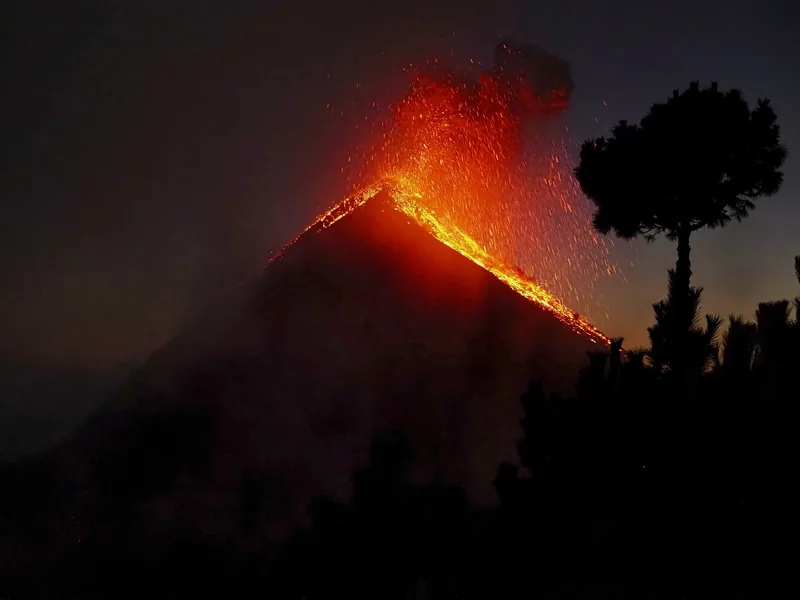
Prepare for wind at stops. The first climb may be warm enough to take a layer off. Put it back on before longer stops, especially when you are above tree cover. If you are staying out to look toward Fuego after dinner, carry the layer you need while standing still. Cloud can hide Fuego on a dry day at camp. An open view may return for a few minutes and close again. A camp night gives you several opportunities to look without moving toward the restricted volcano. The orange light sometimes visible in pictures requires both activity and visibility. Choose the route for the climb and night as well as the view.
Pick an alternative that fits the time if the guide calls off the departure. A shorter hike around another volcano may still depend on separate access and weather decisions. Acatenango and Pacaya compares how much of the day the latter takes and where it starts. Another Antigua day without a mountain departure makes it easier to use a later Acatenango opening. Keep your guide’s contact close enough to find out which date changes are available.
Set a backup date
When booking lodging and onward travel, pick your hike day and a later day you could use without losing another reservation. If the calendar is tight, record which parts of the trip you can change. Look at the booking terms for the difference between an official closure, cancelling because rain is expected and opting out of the summit at camp. The lodging and transfer reservations have their own change deadlines if the group shifts a day.
Keep one flexible night on whichever side of the original dates could change. If you arrive in Antigua after dark on the eve of the first departure, decide how you would get clothing and water before moving the climb. When leaving for Lake Atitlán, reserve time for a Panajachel transfer and a boat if you are staying across the lake. A return after the last workable connection can make a cheap booking change much more costly. Write down what can move, including a stored bag and the hotel you want to return to.
If a trip goes ahead but skips the summit, read what the overnight still includes. If an official closure cancels the whole climb, look at the policy for the itinerary you paid for. Keep the two cases distinct in the trip budget. Trade a hard turnaround time for a return day that can survive delays. That choice matters in both wetter and drier months.